Table Of Content
These ingredients are those that aren’t typically found in the diet, such as minoxidil and plant-based compounds. But finding the right formula isn't a matter of simply choosing a product off the shelf and hoping that it works. “I encourage everyone with a concern for hair thinning or shedding to consult with a health-care provider first,” says Paradi Mirmirani, MD, a board-certified dermatologist who specializes in hair disorders with Kaiser Permanente in Vallejo, CA. “When you brush your hair, you feel it because the sensory neurons are directly being stimulated,” Dr. Higgins said. Studying hair follicles is challenging, because they begin to decay soon after being removed from the body, said Claire Higgins, a bioengineering professor at Imperial College London and an author of the study.
How to Detox Your Scalp Safely at Home
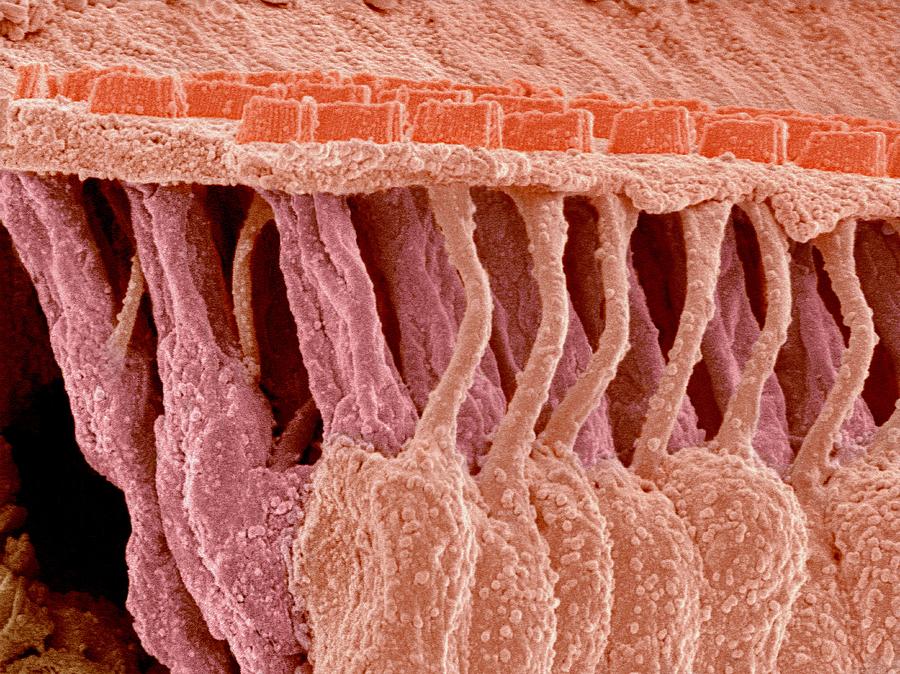
The nerve cells then pass on the message of sound to the brain, and the brain interprets the type and intensity of the sound. All of these cells have what appear to be hairs on the upper end of the cell. The bottom of the cells are stuck onto a membrane called the basilar membrane.
Cochlear hair cells: the sound-sensing machines
Breaking the Sound Barrier: Dr. Ksenia Gnedeva's Transformative Research on Growth and Regeneration in the Inner ... - University of Southern California
Breaking the Sound Barrier: Dr. Ksenia Gnedeva's Transformative Research on Growth and Regeneration in the Inner ....
Posted: Tue, 22 Aug 2023 07:00:00 GMT [source]
Hair cells should continue to attract basic researchers for many decades to come, and will no doubt repay that curiosity with many experimental insights. This has been an active topic of research and discussion, and has been reviewed in depth elsewhere (Coffin et al. 2004; Burighel et al. 2011). While many invertebrates have mechanosensitive cells bearing cilia and/or microvilli, it has been difficult to identify candidate homologs to vertebrate hair cells. Mechanosensory cells on the tentacles of the sea anemone Nematostella vectensis have many interesting properties, including bundles of actin-filled stereocilia bound together by Ca+-dependent links (Tang and Watson 2014; Menard and Watson 2017).
The Piezo channel is a mechano-sensitive complex component in the mammalian inner ear hair cell
A Hairy Truth About Your Sense of Touch - The New York Times
A Hairy Truth About Your Sense of Touch.
Posted: Wed, 08 Nov 2023 08:00:00 GMT [source]
This myth exists because it really looks like the hair on a corpse grows by itself. However, this phenomenon can be attributed, quite simply, to good ole relativity. Considering that human bodies consist of 70% water, it is no surprise that they shrink considerably after the loss of moisture. Compared to its now shrunken appearance, the corpse’s hair seems to have grown longer. Now, in a new study that they have published in the European Journal of Neuroscience, Dr. White — together with researchers from the University of Rochester and the Massachusetts Ear and Eye Infirmary — show how they tried to recreate this process in mammals.
By week 22 of pregnancy, babies already have all of their hair follicles, or openings in the skin where hair grows. This totals about five million hair follicles, with about one million on the head and 100,000 on the scalp. It protects your skin and traps particles like dust around your eyes and ears.
The sensory and motor roles of auditory hair cells
Other causes of an itchy scalp, like scalp psoriasis (an autoimmune skin condition), are less common. The most important step is to test your serum before using it for the first time. “Apply the serum to a small spot on the scalp for a few days to ensure that there is no irritation before applying it more broadly,” says Dr. Mirmirani. “A measured approach is best.” To that end, get comfortable with the fact that you’ll need to be both consistent and patient in your usage, as the results can take time.
The scientists knew from work done by other groups that the neurons in the skin surrounding hair follicles are capable of sensing movement. One of these membranes — the basilar membrane — is like an elastic wall, on top of which sits the organ of Corti. Your cochlea is filled with fluid and shaped like a snail, tapering from a wide end called the base to a narrow head called the apex. The base is most responsive to high-pitched sounds (like birds chirping) while the apex is most responsive to low-pitched sounds (like a bass drum).
Sounds of a specific frequency produce a general wave within the cochlea, but movements of the basilar membrane are highly accelerated only in a very restricted region (von Bekesy, 1960). This phenomenon is called frequency tuning, and relies in part on the geometry of the basilar membrane, which is wider and more flexible at the apical low frequency end and narrower and stiffer at the basal high frequency end (Hudspeth, 1985). A clue to the significance of this efferent pathway was provided by the discovery that basilar membrane motion is influenced by an active process within the cochlea, as already noted. First, it was found that the cochlea actually emits sound under certain conditions.
Synaptic vesicles (small spheres) are clustered around the ribeye protein (large oval) and are linked to it by as-yet undescribed tethers. The bassoon protein (pedestal below ribeye) is positioned between ribeye and the presynaptic membrane and may serve as an anchor for ribeye. Voltage-sensitive Cav1.3 Ca2+ channels (dark spots near bassoon) are clustered tightly around the ribeye-bassoon complex, minimizing the diffusion time between Ca2+ entry and Ca2+-triggered exocytosis.
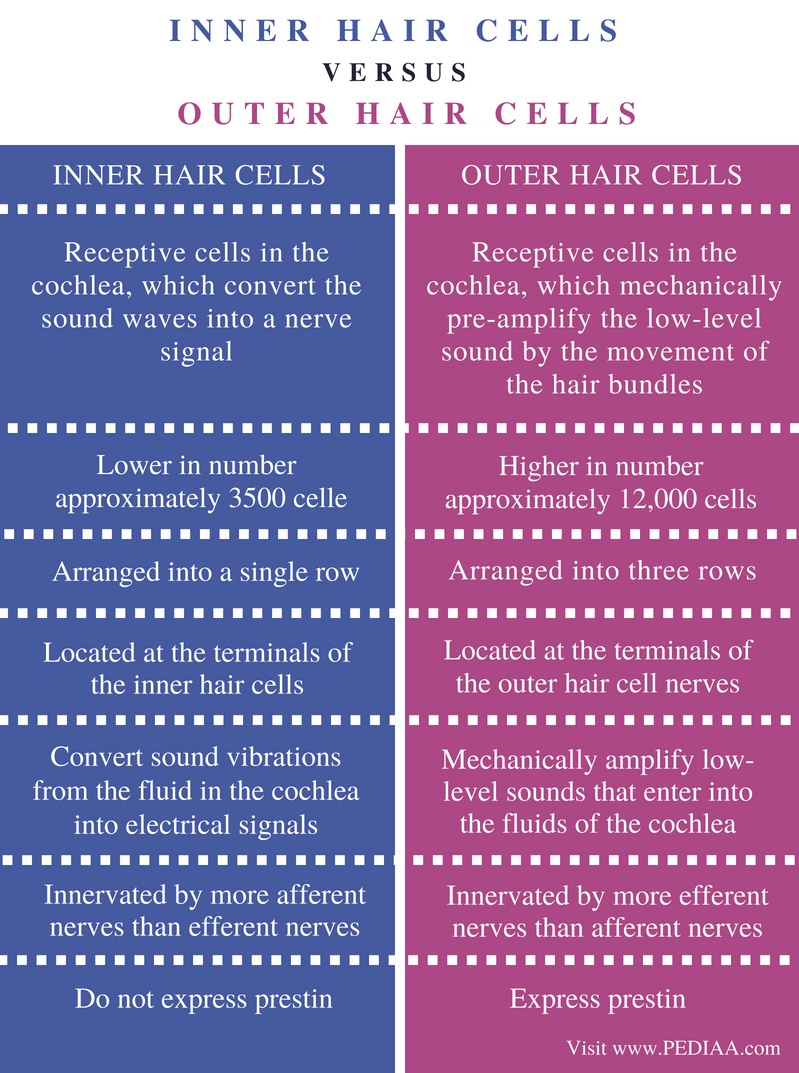
The role of the LOC system is still unknown, but the presence of several neurotransmitter and modulators in its terminals, such as dopamine, acetylcholine and GABA, suggest that it has complex functions (Eybalin, 1993). The afferent neurons that have been described so far contact only IHC, are classified as type I, and represent 95% of all afferents (Kiang et al., 1982). There is a minor percentage of neurons, called type II, that receive inputs from several OHC with en passant synapses. Glutamate also mediates synaptic transmission at these synapses, and ribbons have been found in OHC, with somewhat different shapes (Weisz et al., 2012). Expression of kainate receptors subunits (GluK2 and GluK5) have been detected in type II fibers (Fujikawa et al., 2014).
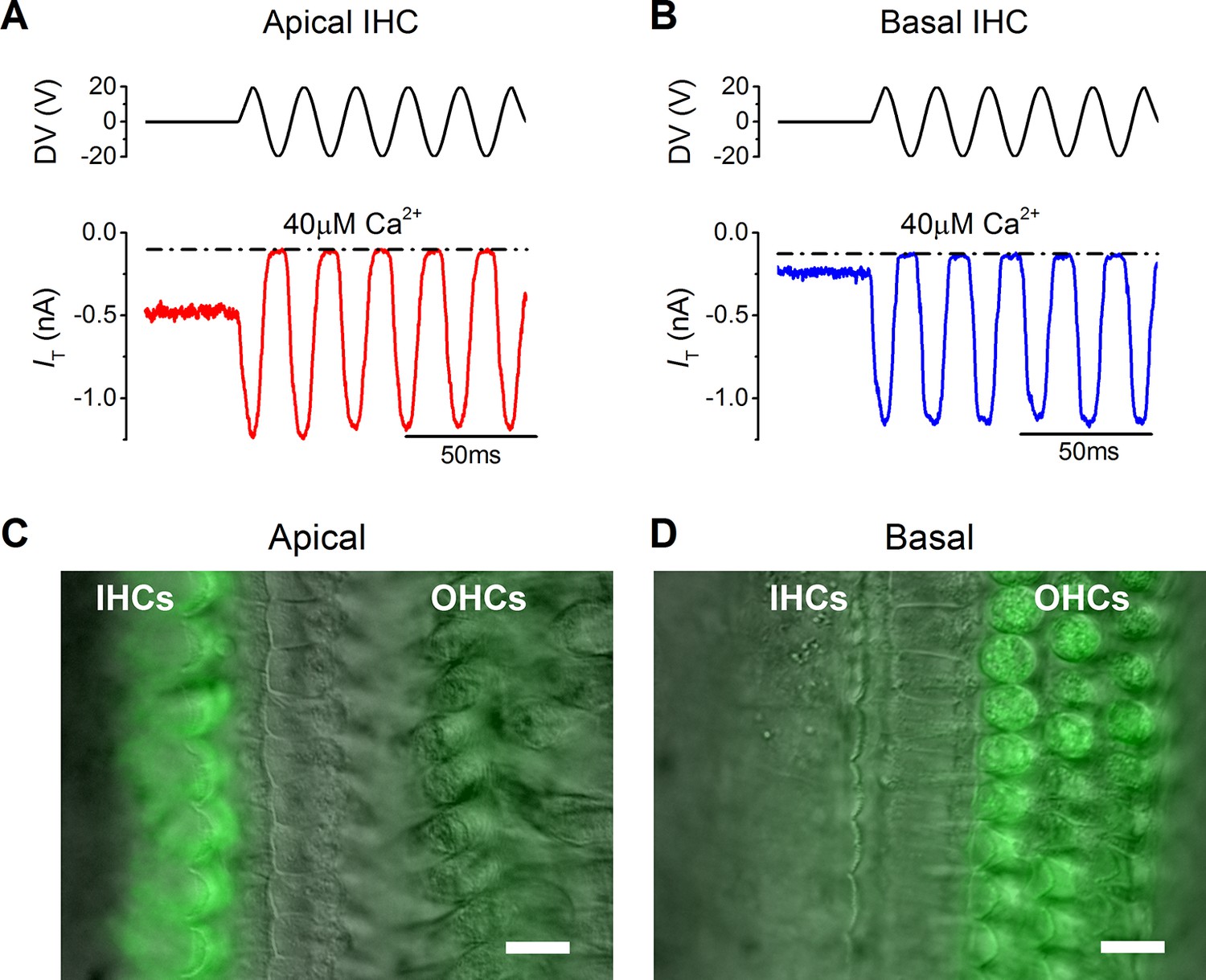
In short, the hair cell exploits the different ionic milieus of its apical and basal surfaces to provide extremely fast and energy-efficient repolarization. Transmitter release at the hair cell’s ribbon synapse occurs in response to graded changes in presynaptic membrane potential, not action potentials, similarly to some retinal synapses (Matthews and Fuchs, 2010). In the absence of sound stimulation, IHC resting membrane potential is approximately at −60 mV, and upon the arrival of a sound, transient depolarizations upto 0 mV typically occur (Russell and Sellick, 1978; Dallos, 1986).
Permanent NIHL is due to the irreversible destruction of cochlear hair cells and/or damage to their mechano-sensory hair bundles (Liberman and Dodds, 1984). It has been proposed that temporary NIHL is due to swelling of cochlear nerve terminals at their hair-cell synapses (Spoendlin, 1971; Robertson, 1983). However, recent work in both mouse (Kujawa and Liberman, 2009) and guinea pig (Furman et al., 2013) has shown that acoustic overexposures causing reversible threshold elevations can lead to an irreversible degeneration of auditory nerve fibers.
They usually start by steaming the scalp to loosen buildup and thoroughly massage the product into the entire scalp. Exfoliating scalp scrubs are another option for ridding your hair of debris and excess oils. However, it is a good idea to do this infrequently to avoid scalp irritation. It is best to see a healthcare provider if you are experiencing a dry, oily, itchy, flaky, or red scalp that is not responding to at-home treatments, is worsening, or is impacting your overall quality of life. Dandruff is a common problem in which the skin on the scalp starts to flake.
These otoacoustical emissions can be detected by placing a sensitive microphone at the eardrum and monitoring the response after briefly presenting a tone. These observations clearly indicate that a process within the cochlea is capable of producing sound. Second, stimulation of the crossed olivocochlear bundle, which supplies efferent input to the outer hair cells, can broaden eighth nerve tuning curves. Finally, isolated outer hair cells move in response to small electrical currents, apparently due to the transduction process being driven in reverse. Thus, it seems likely that the outer hair cells sharpen the frequency-resolving power of the cochlea by actively contracting and relaxing, thus changing the stiffness of the tectorial membrane at particular locations.
The arrector pili muscle, a tiny bundle of muscle fiber, is attached to the outer sheath. When the muscle contracts, it causes the hair to stand up, otherwise known as goosebumps. The sebaceous gland produces sebum, or oil, which is the body’s natural conditioner. More sebum is produced during puberty, which is why acne is common during the teen years. It is interesting to note how transient we consider our hair to be, cutting it confidently, knowing that it will simply grow back.
The burial environment influences the rate of decomposition to a considerable extent. Soil, moisture, chemicals and the animals found in the environment can either increase the decomposition rate or preserve the corpse. Dry and arid conditions like those found in deserts are excellent preserves of hair, as microbes do not thrive in such conditions. However, in most normal soils, both hair and bone will eventually degrade after a few years.